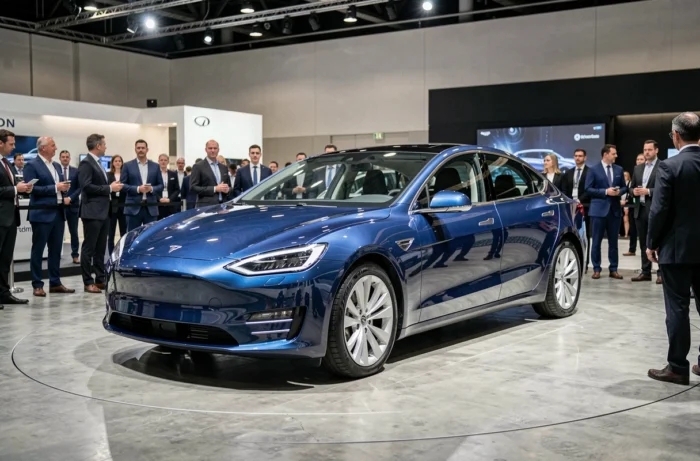
The automotive sector is going through a dense phase. Between a Franco-German political agreement on emission rules, the return of affordable electric city cars at the Paris Motor Show, and the emergence of the electric used car market, several lines are shifting simultaneously. Here are the topics that really matter right now.
Franco-German CO2 Agreement: What the Compromise Changes for Manufacturers
On October 15, 2026, Paris and Berlin found common ground on the European automotive package. This text addresses the CO2 targets for 2035, the treatment of plug-in hybrids, and the concept of “Made in Europe.”
Note that this compromise remains a negotiating position between two countries. It is not yet a rule adopted at the European level. Discussions in the Council of the European Union and Parliament will follow.
Several points deserve attention. The compromise provides for a smoothing of emissions, meaning that manufacturers could offset a bad year with a good one, instead of being penalized each year in isolation. It also introduces supercredits, a mechanism that allows for greater accounting of very low-emission vehicles in the overall calculation. Specifically, each electric car sold would carry more weight in the regulatory balance.
The other aspect concerns European preference. Vehicles receiving public aid or accessing public markets may have to meet local content criteria. To follow the evolution of these regulatory files, analyses published on auto-actu.org help understand the implications for each market segment.

Electric City Cars at the Paris Motor Show: The Return of Prices Below the Symbolic Barrier
You may have noticed that affordable electric cars have almost disappeared from catalogs in recent years? The Paris Motor Show 2026 has reversed this trend. Several manufacturers presented models designed for the city, with significantly more accessible prices.
Smart unveiled a two-seater model priced under twenty thousand euros. Citroën made headlines with a revamped 2 CV concept. Renault confirmed the return of the electric Twingo, while Volkswagen showcased its ID. Polo.
The electric city car segment is becoming competitive again, which is good news for buyers who do not need an SUV. The common feature of these models: smaller batteries, a range calibrated for urban and suburban use, and an entry price that approaches that of equivalent combustion vehicles.
This offensive also responds to the pressure from Chinese manufacturers, who offer electric vans and city cars at very aggressive prices. Chinese competition is accelerating price reductions in Europe.
Electric Used Car Market: What to Check Before Buying
The supply of used electric cars is rapidly expanding. The main reason: returns of vehicles from long-term rentals (LLD) and corporate fleets are feeding the market. These cars are often two or three years old, have moderate mileage, and a well-maintained service history.
The condition of the battery remains the decisive criterion for purchasing a used electric vehicle. The range announced by the manufacturer does not always reflect the actual capacity after several years of use. Before signing, several checks are necessary:
- Request a battery diagnostic (state of health, or “SoH”), which indicates the percentage of remaining capacity compared to new
- Check the charging history: a car that has mainly been charged with fast charging may have a more degraded battery than another of the same age
- Consult the digital maintenance log to ensure that software updates have been performed, as they sometimes influence battery management
One point to remember: a digital battery passport is expected starting in February 2027. This standardized document will facilitate comparisons between used vehicles by making battery health data accessible to the buyer.
Connected Vehicle Data: An Issue for Repair and Resale
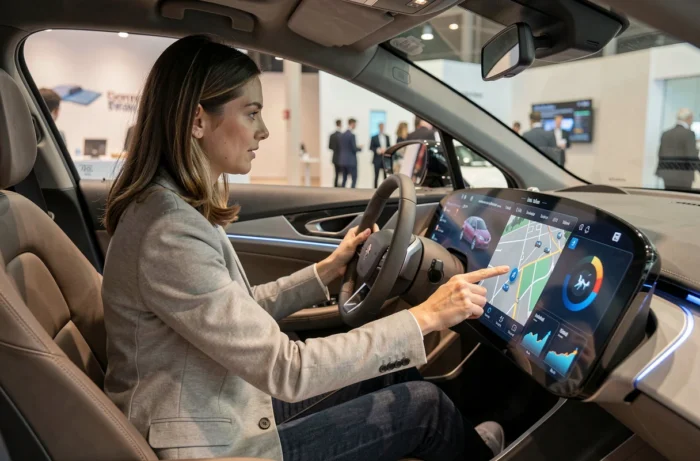
Recent cars produce a considerable amount of data. Tire pressure, real-time consumption, trip history, technical alerts: everything passes through the manufacturer’s servers. Until now, access to this information by the owner or an independent mechanic has been limited.
The Data Act, which came into effect in September 2026 according to 60 Millions de consommateurs, is set to change the game. This European regulation stipulates that the owner of a connected vehicle can grant access to their data to a third party of their choice, such as an independent repairer or an insurance service.
Why does this matter? Because data transparency directly influences repair costs and resale value. A mechanic who accesses error codes without going through the manufacturer’s official network can offer a more competitive quote. A used car buyer who reviews the complete vehicle history makes a better-informed decision.
European Preference and Purchase Aids: A Filter Under Construction
The “Made in Europe” aspect of the Franco-German compromise deserves close attention. The idea is to condition access to public aid (ecological bonus, fleet subsidies) on local production criteria. If this direction is confirmed at the European level, some imported models could lose their eligibility for the bonus.
For European equipment manufacturers, this is a positive signal. For consumers, the impact will depend on the scope retained. Would a vehicle assembled in Europe with predominantly imported components be eligible? The answer is not yet clear.
What is certain is that the framework for understanding the automotive market is no longer limited to the catalog price and technical specifications. Access conditions for aids, battery traceability, and availability of vehicle data have become criteria in their own right. Car purchasing in 2026 is also played out on the regulatory field.