Fashion refers to a system of clothing codes that evolve in seasonal cycles, influenced by runway shows, industrial constraints, and increasingly, by environmental regulations. Understanding these mechanisms allows for sustainable style choices rather than chasing every micro-trend.
Materials and textures: the technical foundation of a successful autumn-winter look
Before discussing colors or silhouettes, the material of a garment determines its drape, longevity, and comfort. A thick wool blend does not drape like synthetic jersey, even if the two pieces look similar in a photo.
For the cold season, three families of textures dominate the collections. Textured and fluffy wools add volume to streamlined silhouettes. Soft leather (or its plant-based alternatives) structures short jackets and midi skirts. Heavy satins, usually reserved for evening wear, migrate into everyday fashion in the form of shirts worn open over a turtleneck.
The choice of material also affects maintenance. A felted wool coat can withstand dry cleaning, whereas a piece made from textured viscose may deform after the first unsuitable wash. Checking the composition on the label, browsing fashion articles on Soyons Sérieux, or comparing product sheets between two brands takes a few minutes but prevents disappointing purchases.
Trendy autumn-winter colors: building a coherent palette
Autumn-winter runway shows present dozens of shades each year. Adopting everything leads to an accumulation of orphaned pieces. A more effective approach is to choose a palette of three to five compatible colors that work well together and with the basics already present in the wardrobe.
Base colors and accent colors
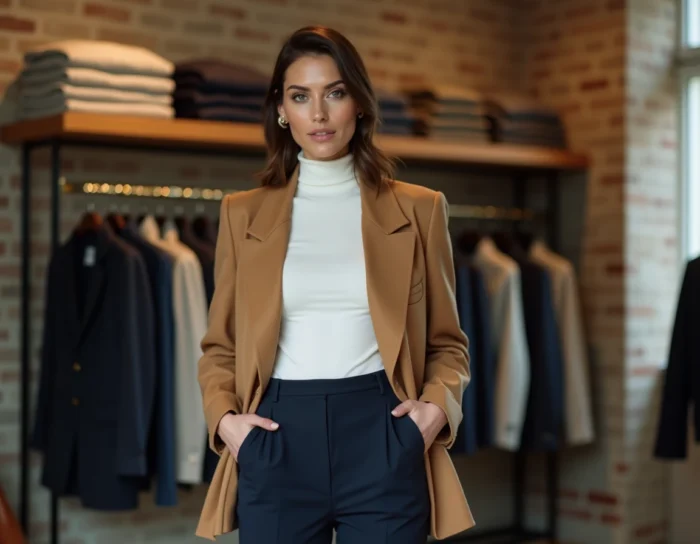
Base colors (black, navy, heather gray, off-white, camel) form the foundation of the outfit. Accent colors add character. This season, saturated tones take precedence over pastels:
- Deep burgundy works well as an accessory (bag, belt, scarf) as well as a main piece (dress, wide pants).
- Forest green pairs effortlessly with camel and cream, suiting most skin tones.
- Cobalt blue, bolder, is a great substitute for navy when looking to energize a monochrome look.
A common mistake is to multiply accent colors in the same outfit. One strong color per silhouette is enough to create a focal point. The rest of the outfit serves as a neutral backdrop.
Second-hand and responsible fashion: what the numbers really say
Sales of second-hand clothing increased in France in 2025, according to the Refashion study published in September 2026. The most significant growth concerns second-hand sold directly by brands, more than transactions between individuals.
This figure deserves a nuance. Refashion specifies that the environmental benefit of reuse is based on a substitution hypothesis: buying a second-hand piece instead of a new one, not in addition to it. Accumulating vintage finds without reducing new purchases negates the positive effect.
European regulation on textile waste
European rules now extend brands’ responsibility to textile waste. Member states must transpose these provisions, with a deadline for implementing the measures set for 2028. The destruction of unsold items also becomes a concrete regulatory issue: brands are encouraged to prioritize resale, donation, repair, or reuse.
For consumers, this means that the second-hand offering in official stores will continue to expand. Checking if a brand offers a take-back or resale program before buying new becomes a useful reflex, not just for the environment but also for the budget.
Style tips: pairing strong pieces without overloading the look
A standout garment (unusual cut, graphic print, bright color) functions like the soloist in an orchestra. The rest of the outfit accompanies it without competing.
The volume contrast rule
Pairing a fitted top with loose bottoms, or vice versa, creates immediate visual balance. Wide fluid wool pants benefit from being worn with a fitted sweater or a tucked-in shirt. Conversely, an oversized jacket pairs better with straight jeans than with cargo pants.
Volume contrast replaces symmetry as the basic principle for current silhouettes. This mechanism works regardless of body shape, as it plays on perceived proportions rather than a body norm.
Accessories: three pieces to arbitrate
Accessories change the perception of an outfit faster than changing clothes. Three categories suffice to cover most situations:
- A structured leather or faux leather bag, medium-sized, that transitions from office to weekend effortlessly.
- A pair of slightly square-toed ankle boots, more current than pointed toes, that elongate the leg under straight pants.
- A medium-width belt, worn over a coat or long cardigan, to define the waist without resorting to a fitted piece.
Investing in the quality of these three elements produces a disproportionate effect relative to their cost. A well-chosen bag can elevate twenty different outfits.
The autumn-winter 2026-2027 fashion trends confirm an underlying movement: textures matter as much as colors, silhouettes are built through volume contrast, and second-hand shopping is establishing itself as a legitimate purchasing channel. The most stylish garment remains the one you actually wear, not the one waiting at the back of the closet.