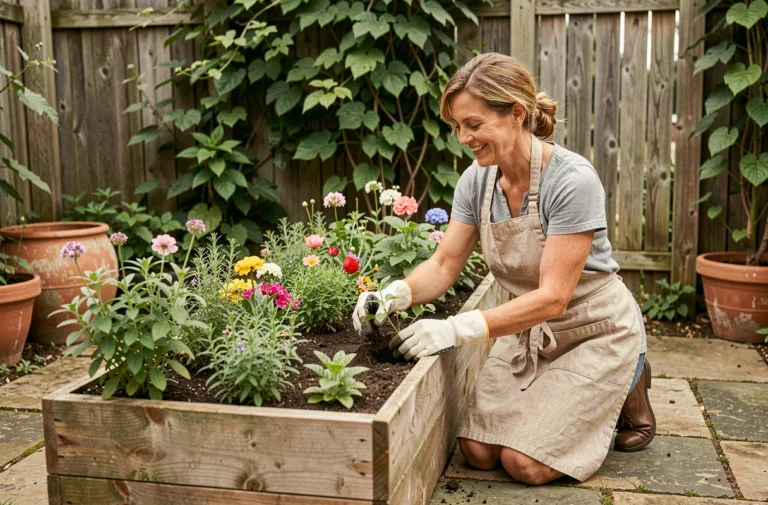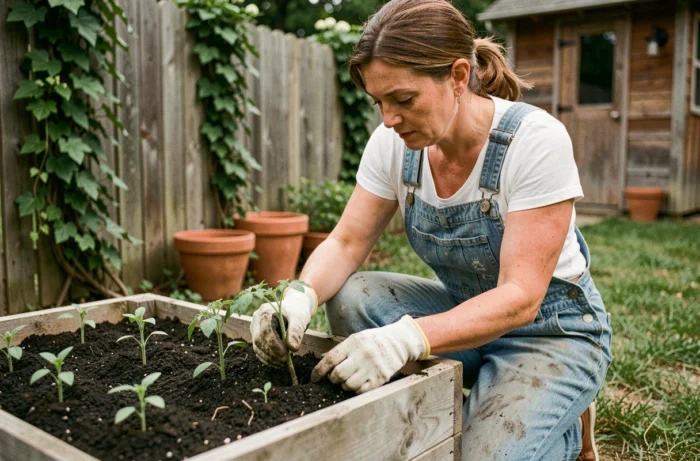
A garden is maintained according to the nature of its soil, the exposure of its plots, and the type of plants in place. Before planting or redesigning, identifying these three parameters avoids most costly errors in time and energy. Garden maintenance and layout do not rely on universal recipes: each plot imposes its constraints, and ignoring them means working against your own space.
Soil and exposure: the diagnosis that conditions everything else
The texture of the soil (clay, sandy, loamy) determines its ability to retain water and nutrients. Clay soil remains moist for a long time and compacts easily, while sandy soil drains quickly but retains few fertilizing elements. Observing the soil after rain already provides a reliable indication.
Exposure follows the same logic. A south-facing area dries out the soil in summer and is suitable for Mediterranean plants. A north-facing space, shaded for part of the day, is better suited for ferns, hostas, or hellebores. Crossing the nature of the soil and sunlight before any planting reduces replacements and corrective watering.
To deepen these basics and adapt each action to your land, Instant Jardin’s gardening tips detail techniques suited to each type of garden.
Differentiated garden maintenance: mow less to gain more
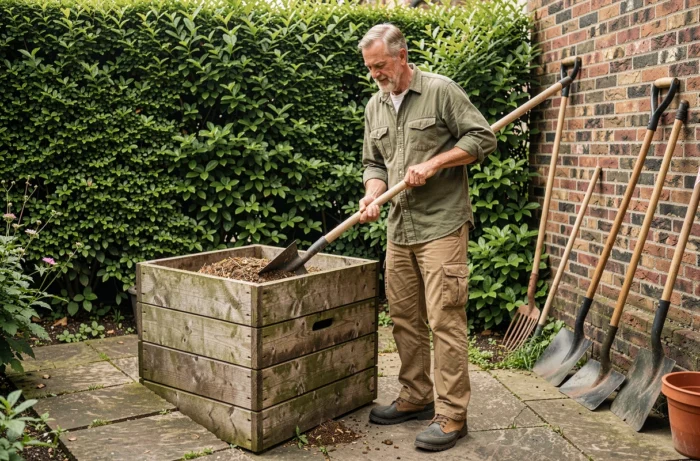
Differentiated maintenance involves not applying the same level of intervention across all areas of the garden. Frequently used areas (around the house, paths, terrace) are regularly mowed and weeded. Peripheral zones, however, can be left in late mowing or spontaneous meadow.
An experience report published by Mon Jardin & Ma Maison describes a gardener who reduced mowing frequency in certain plots. The result: spontaneous flowers appeared, attracting pollinators and beneficial insects, while daily living spaces remained perfectly navigable.
Less mowing does not mean an abandoned garden. The method relies on intentional segmentation: a mowed strip along the flower beds or vegetable garden is enough to show that the choice is deliberate. The time savings are real, and the garden’s biodiversity improves without additional intervention.
Regulations on phytopharmaceutical products in the garden
In France, the sale and use of phytopharmaceutical products for non-professional use are prohibited for individuals. There are exceptions: certain biocontrol products, low-risk products, and those permitted in organic farming remain accessible. The label “Authorized for garden use” is the only reliable marker on the shelf.
This regulation also applies to paths and terraces, where the reflex to use chemical weedkillers persists. Mulching, manual weeding, and boiling water are the most common legal alternatives. Systematically checking the label before any purchase avoids penalties.
Concrete alternatives to chemical weeding
- Organic mulching (wood chip, straw, dead leaves) limits the germination of weeds while nourishing the soil as it decomposes.
- Thermal weeding with flame or steam destroys the aerial parts of weeds without chemical residue but requires several passes per season.
- False sowing, which involves preparing the soil and then allowing weeds to sprout before mechanically destroying them, significantly reduces weed pressure in the vegetable garden.
Garden layout: structuring space by use
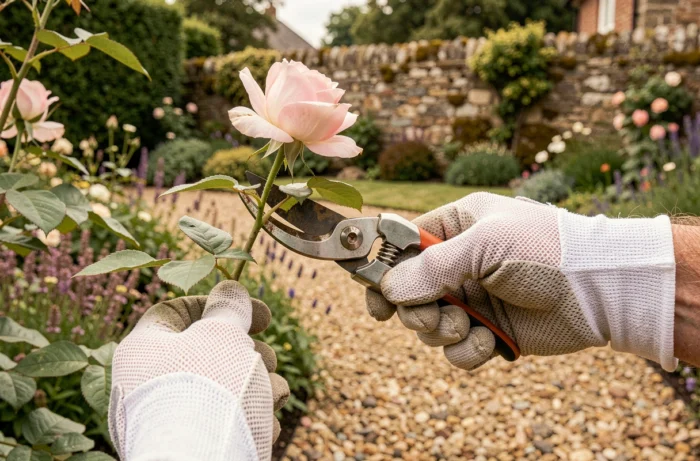
Rather than thinking of the garden in decorative terms, structuring it by usage zones yields a more functional and easier-to-maintain result. Three categories are sufficient in most cases: living space (meals, relaxation), productive space (vegetable garden, herbs), and buffer space (hedges, borders, semi-wild areas).
Each zone has its own level of maintenance. The living space requires clean soil, short grass, or mineral covering. The vegetable garden demands regular but localized interventions. The buffer space, on the other hand, operates with one or two pruning sessions per year.
Choosing plants according to the zone
Evergreen hedges (laurel, photinia, eleagnus) provide screens all year round but require one to two annual prunings. Mixed countryside hedges (dogwood, hazel, hawthorn) can withstand more spaced-out maintenance and offer staggered flowering.
In the vegetable garden, companion planting limits treatments. Basil near tomatoes, marigolds at the edge of rows: these classic associations work through olfactory repulsion and cost nothing. For ornamental flowers, favor perennials suited to the local climate rather than annuals that need replanting each year, reducing both budget and workload.
Water management in the garden: water just enough rather than more
Watering is the most time-consuming and wasteful maintenance task when poorly calibrated. Two technical principles change the game.
The first: watering in the evening or early morning significantly reduces evaporation compared to watering in the middle of the day. The second: targeting the base of the plants rather than the foliage limits fungal diseases and concentrates water where the roots absorb it.
- Drip irrigation, laid on the ground under mulch, distributes water slowly and without waste. Its installation takes half a day for a medium-sized vegetable garden.
- Oyas (buried clay pots) diffuse water through porosity directly into the root zone, with no surface evaporation.
- Rainwater harvesting via a tank connected to the gutter covers a significant portion of watering needs between spring and autumn.
A properly mulched soil retains its moisture several days longer than bare soil. Combining mulching and targeted watering transforms water management in the garden from a daily chore into a weekly task.
The best-designed garden is the one that requires the least corrections afterward. Diagnosing your soil, zoning your uses, respecting regulations on treatment products, and mastering watering cover the majority of needs, without expensive equipment or landscaping expertise.